
Written by Senior Reef Strategist & Content Lead at Reefkg with 5+ years in reef-keeping, specializing in SPS-dominant systems and advanced water chemistry.
I’ve been reefing for years, and I’ll admit it, it got the better of me. I thought I had mastered my tank so much so that I would know what’s wrong simply by looking at the tank. Crystal clear water and healthy-looking fish meant that the chemistry was fine.
I was wrong. My tank didn’t crash overnight. The unfortunate part is that by the time I noticed, I was on the brink of a total system collapse.
Here is the story of how reef tank parameter tracking saved my tank, and why I’ll never go back to my old reefing ways.
Why I Started Tracking Reef Parameters
For months, I relied on what my eyes saw, but human vision isn’t that fine to detect a minute 0.5 dKH drop in alkalinity or a creeping rise in phosphates.
I noticed my growth has hit a roadblock. The colors started to appear, or the “browning out” phase had begun. I did a 20% water change, assuming it would be a quick fix for all my reef woes.
Far from improving anything, it made things worse by adding fresh salt to a system that was already chemically unstable.
The Lesson:
| In a reef ecosystem, stability is king. It’s not just about having the “right” numbers; it’s about keeping them there. This realization is exactly why I started tracking reef parameters religiously. |
How reef tank parameter tracking saved my tank through the use of the ReefKG app’s data-driven charts and AI dosing intelligence.
The Near-Miss: A Reef Tank Story
The breaking point came on a Tuesday. I found bleaching in a colony of birdsnest coral. With a sinking heart, I finally pulled out my test kits and spent an hour squinting at color charts.
The test gave the following results:
- Alkalinity: 6.2 dKH (Target: 8.5)
- Magnesium: 1150 ppm (Target: 1350)
- Nitrates: 40 ppm (Target: 5-10)
It felt like I was on a battlefield fighting against an unpredictable enemy, water chemistry that could strike out when I least expected it. My magnesium had plummeted, causing my alkalinity to swing wildly beyond control.
My SPS corals were suffering from Rapid Tissue Necrosis (RTN), a condition in which the tissue peels off, and their existence is on a time bomb that could explode anytime. I was looking at a total reef tank crash, and I had no historical data to tell me when it started.
How Tracking Flipped the Script
I spent the next two weeks trying to correct the imbalance at a very slow pace. Instead of rushing through the testing, I did one thing differently; I logged.
I realized something that I had missed before in my earlier reefing journey. Running your tank without a visual history is like staring into a blind alley, not knowing where to move next.
By plotting my numbers on a graph, I could see a pattern emerging. It led me to discover that my dosing pump was slightly clogged, which is what triggered a slow decline in Calc and Alk over three weeks.
Reef tank parameter tracking saved my tank because it turned “guesswork” into definite “knowledge.”
- Catch the Drift: See a trend before it becomes a tragedy.
- Verify Dosing: Ensure my equipment was actually doing what I programmed it to do.
- Correlate Behavior: Note that when my Nitrates hit 15, my Zoanthids actually look better—finding my tank’s “Golden Zone.”
ReefKG: The Reef App That Works
I tried every solution from spreadsheets to notebooks, but nothing seemed to generate the results I was looking for. I even experimented with generic “aquarium” apps that felt like they were designed for reef keeping in
It was in such moments of despair that I found my savior in the form of a reef tracker app–ReefKG. If you’re looking for a reef app that works, this is the one. Most apps just hold your data like a digital shoebox, but ReefKG actually interprets it.
- Chemistry Sync Engine: It understands the relationship between your Mag, Calc, and Alk. It doesn’t just tell you a number is low; it helps you understand why it might be falling.
- AI Dosing Intelligence: It helps you calculate exactly how much to dose to reach your target without shocking your livestock.
- Visual Trends: The charts are clean, accessible, and most importantly, accurate.
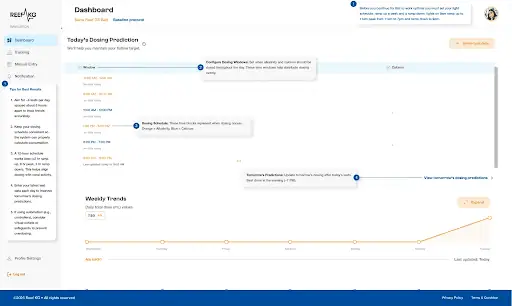
Proactive Reef Tank Crash Prevention
If you’re reading this and your tank looks great, start tracking today. Don’t wait for a crisis to become a chemist.
- Test Weekly: At a minimum, hit the “Big Three” (Alk, Calc, Mag) and your nutrients (N03, P04).
- Log Everything: Even a “perfect” reading is worth logging to establish your baseline.
- Use the Right Tools: Download an app like ReefKG to take the mental load off.
Thankfully, my reef is thriving again, bustling with vibrant colors and corals growing to their full potential.
Beyond this reefing breakthrough, I managed to achieve something that all hobbyists yearn for: peace of mind. I no longer have to stress over my tank as my tank does the work for me. It’s like having a round-the-clock reef tank management companion who handles stability while I enjoy the view of a thriving, stable reef before me.
Don’t let your reef drift. Start tracking, stay stable, and keep reefing.