
Freshwater puffer fish are among the most fascinating and intelligent fish in the oddball category you can keep in an aquarium, alongside other unique species like gourami fish. They showcase some of the most desirable features, like large, expressive eyes, curious personalities, and unique feeding habits, which spark interest in any freshwater setup.
Still, it’s common to find aquarists asking: Are puffer fish freshwater, or are all puffers marine? The answer is yes, as various types of Puffer fish thrive best in non-saline environments. However, hobbyists have to address specific care needs before bringing one home. Proper aquarium setup and cycling are crucial for puffer fish success.
In this guide, we’ll explore the 10 freshwater puffer fish and the fundamentals of freshwater puffer fish care to help you decide the perfect species for your aquarium and experience level.
What Makes Saltwater and Freshwater Puffer Fish Unique?
Freshwater puffer fish are members of the Tetraodontidae family that are specific to fresh, brackish water habitats in different parts of the world. They have earned the name puffer fish owing to their ability to blow up their size by two or three times by sucking in water or air. By appearing bigger than they actually are, they can deter other predators along with their strong, beak-like teeth that glow from a distance.
Beyond that, they have another trick up their sleeve. The skin of puffer fish carries a poison named tetrodotoxin, though its concentration varies from one fish to another.
Puffer fish are known for being highly individual. While some are peaceful, others are territorial, but all of them are more curious and interactive by nature. This makes them a great choice, but they are also demanding in terms of species-specific care, unlike other community fish.
Top 10 Types of Freshwater Puffer Fish Species for Aquariums
1. Dwarf Freshwater Puffer Fish (Pea Puffer)
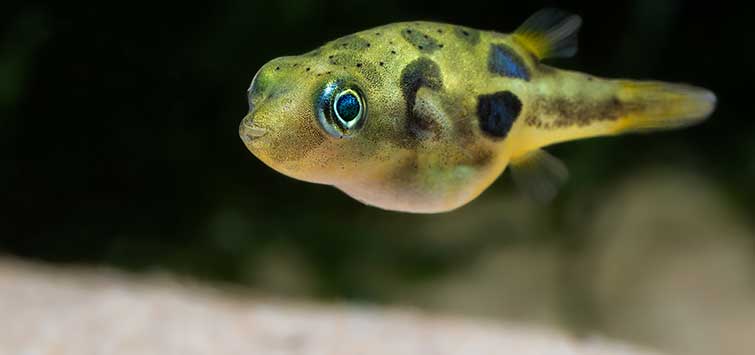
The smallest Puffer Fish species, it is also known as the Indian dwarf puffer and pygmy puffer. This freshwater fish can grow up to 1 inch in size and is best suited for nano tanks that are either 5 or 10 gallons. Setting up a successful nano aquarium requires careful planning and appropriate equipment. Their diet primarily consists of a mix of live and frozen food, including bloodworms, brine shrimp, small pest snails, and white worms.
Despite their tiny size, dwarf freshwater puffer fish can be highly territorial, which is why some hobbyists prefer keeping solo fish in a 5-gallon fish tank by itself or in a group of one male for two to three females in a heavily planted environment.
2. Amazon Puffer (SAP)
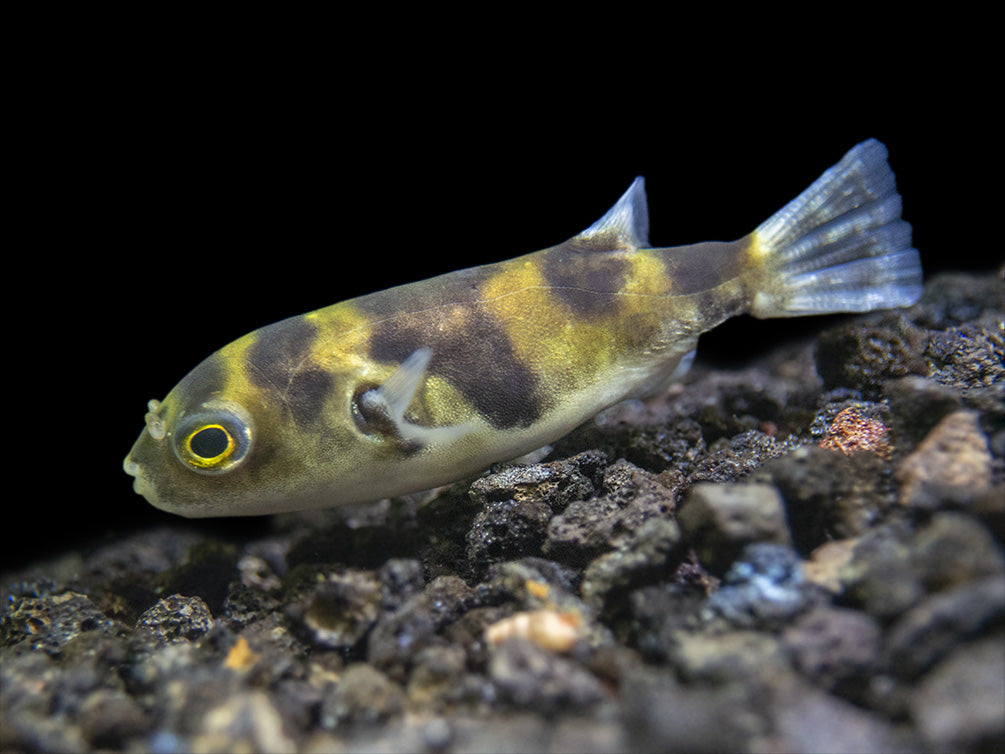
A true puffer fish, the Amazon puffer is native to the Amazon basin with a golden yellow body marked by black, irregular splotches on the back that make a bumblebee pattern. While it is the calmer of puffers, it comes off as feisty and may fin nip slow-moving fish. It’s therefore best kept on its own or in a community setup of a group of six or more carefully selected tank mates like like mollies, large tetras, and dwarf orchids.
Although they primarily feed on hard foods like pest snails and freeze-dried krill, they can be accustomed to eating a mixture of crushed oyster shells and Repashy gel food. This allows them to use their overgrown teeth for scraping off hard surfaces.
3. Figure 8 Puffer Fish
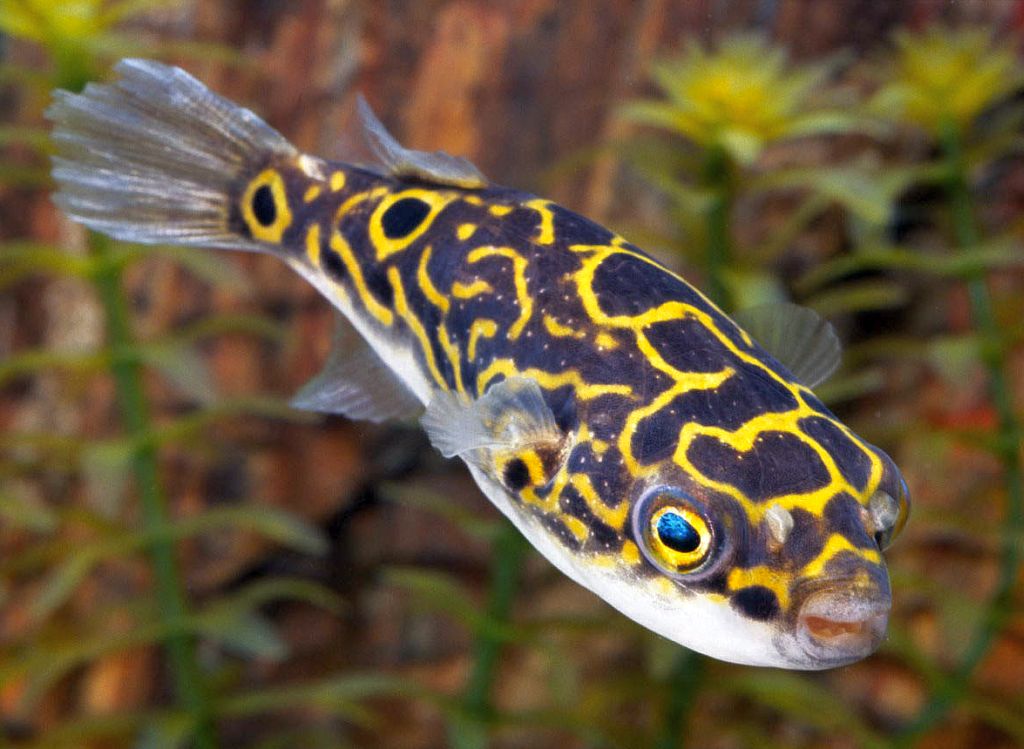
Unlike truly freshwater species, these puffer fish are rightly called brackish fish as they rely on a certain level of salinity to stay healthy. Growing up to 2-3 inches, the fish gets its peculiar name from the yellow-green squiggles on its back that make the shape of the number 8 with prominent black spots.
Due to their highly active nature, they don’t do well in smaller tanks and instead require tanks that offer plenty of space to maneuver and swim around. They can target long-finned species, so it’s advisable to avoid species with flowing fins or slow movements. They make compatible pairs with bumblebee gobies and mollies, while their recommended diet usually consists of pest snails, ghost shrimp, frozen foods, and freeze-dried krill.
4. Green Spotted Puffer
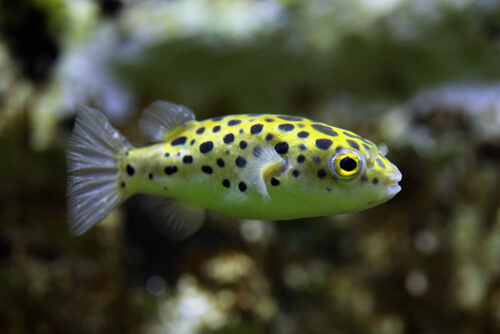
This puffer fish can grow quite long, at 6 inches, and can adapt to fresh or low-end brackish water when juvenile. That changes when they mature, as they now need a mix of fresh and salt water to thrive. This makes them a poor choice for typical freshwater community tanks, as adults require brackish to marine conditions similar to saltwater setups.
Like all puffer fish, their teeth grow continuously and hence must be fed hard-shelled items (like snails, clams, shrimp in the shell) to wear down their beaks. This keeps future overgrowth in check, which can make eating impossible.
GSPs are a highly intelligent and curious lot, but can resort to aggression if bored. They can be kept entertained in complex tank setups with plenty of decorations and hiding spots.
5. Fahaka Pufferfish
Also known as the Nile Puffer or Lined Puffer, Fahakas are one of the largest and most sought-after freshwater puffer species in the aquarium hobby.
Highly engaging and intelligent creatures, they can often be seen digging or “wallowing” in the substrate, often leaving only their eyes exposed. If you are planning to keep a Fahaka puffer, be prepared for a long-term commitment.
Apart from destroying plants and moving aquarium décor around, they can typically attack, severely injure, or kill most tank mates, often suddenly, even after a long period of apparent calm. They are true carnivores that feed on hard-shelled prey (molluscivores) like snails, clams, mussels, shrimp in the shell, and crayfish. They are best kept alone in relatively larger aquariums, as they can grow massively on reaching adulthood.

6. Mbu Puffer Fish
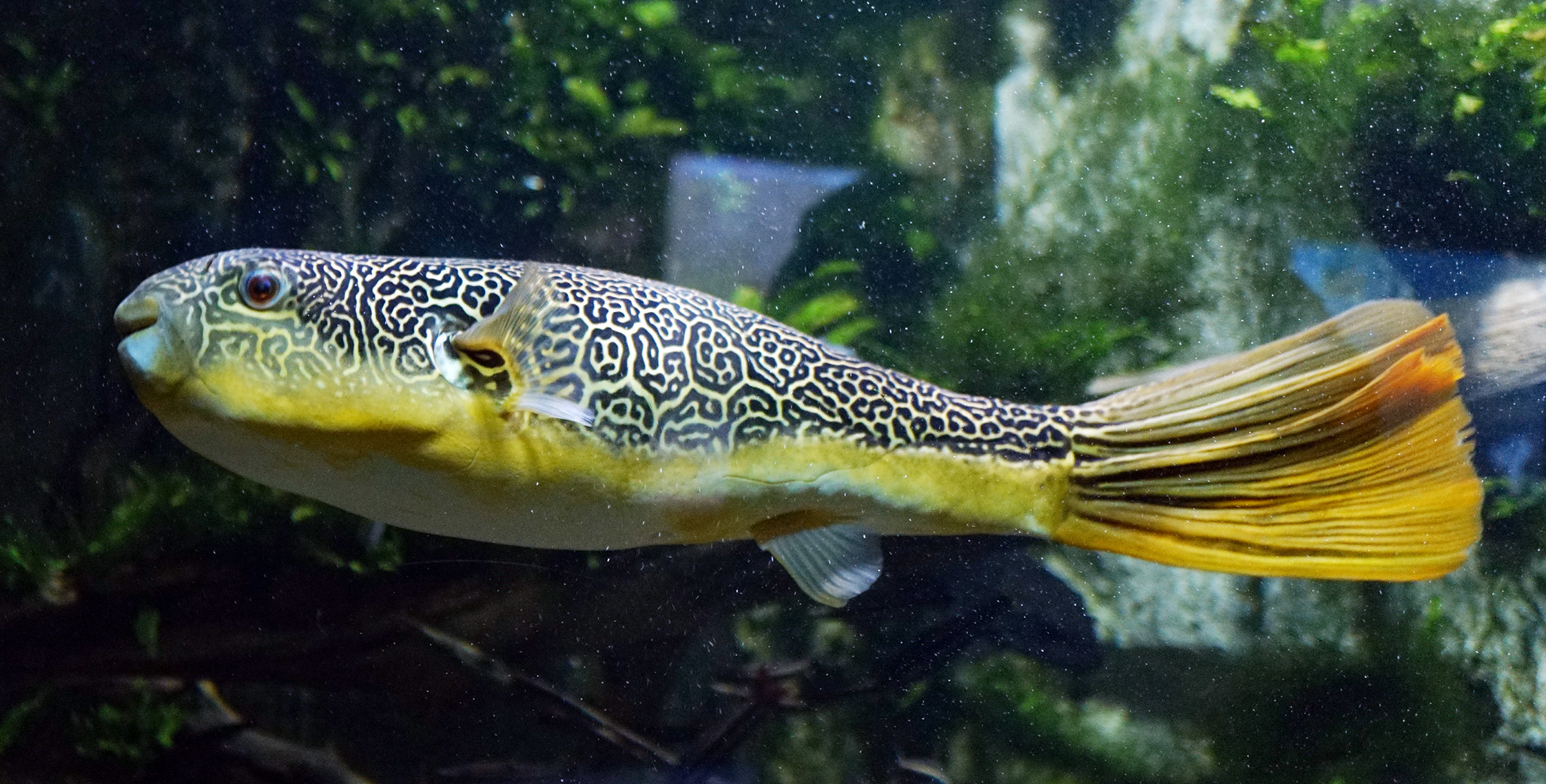
Also named the Giant Freshwater Puffer Fish, this puffer fish holds the record for being the world’s largest puffer, measuring up to 30 inches in length. It’s not just their size but their remarkable intelligence and “puppy-dog” personality that makes them so appealing, though they can be quite demanding of their keepers.
Thanks to its colossal size, this fish requires a huge tank, which is the main challenge for most hobbyists. Mbu Puffers produce a large amount of waste and are sensitive to poor water conditions. The tanks should therefore be equipped with sumps or multiple large canister filters. With a high turnover rate.
It’s also crucial to change 50% of the water weekly to keep nitrate concentration within limits, typically under 15 ppm. Regular water testing is essential for maintaining optimal conditions.
7. Spotted Congo Freshwater Puffer Fish

8. The Yellow Puffer – Tetraodon cutcutia
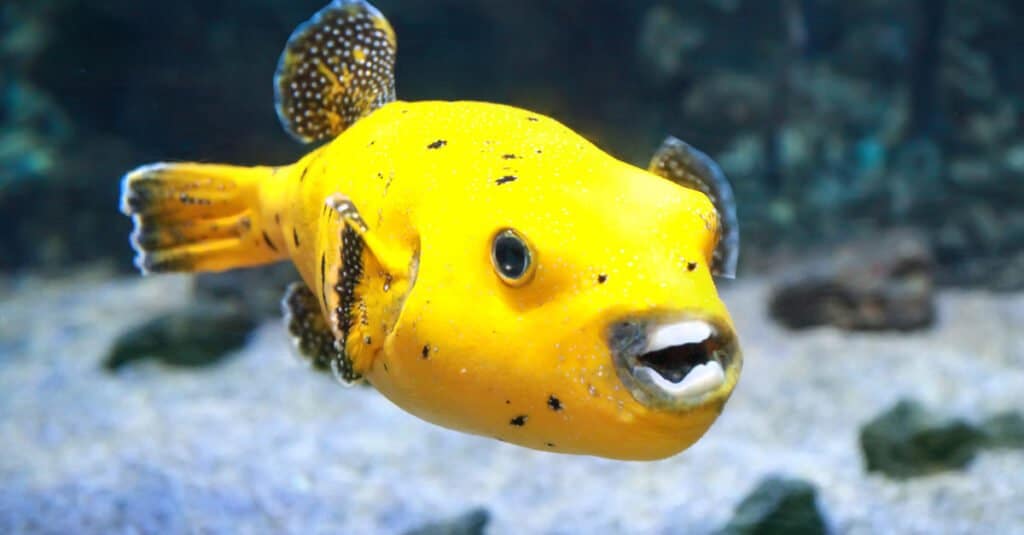
A true freshwater puffer species, the yellow puffer is native to slow-moving rivers and lakes in India and Bangladesh. It is commonly called yellow or golden due to its orange-yellow body. And merely 3 inches in length, which means a 20-gallon tank would be suitable for a single puffer, while a group of puffers would thrive better in 40 gallons or more.
It is a fantastic option for hobbyists seeking a true freshwater puffer without the huge size or extreme aggression of the Fahaka or Mbu puffers.
Nevertheless, these fish are notorious fin-nippers and should be kept in a species-only tank. Or very cautiously with fast-moving, robust fish (like certain small tetras or rasboras) that can outmaneuver them. The Yellow Puffer is considered mildly toxic, containing the neurotoxin Tetrodotoxin (TTX), so avoid handling them outside of water.
9. Avocado Puffer
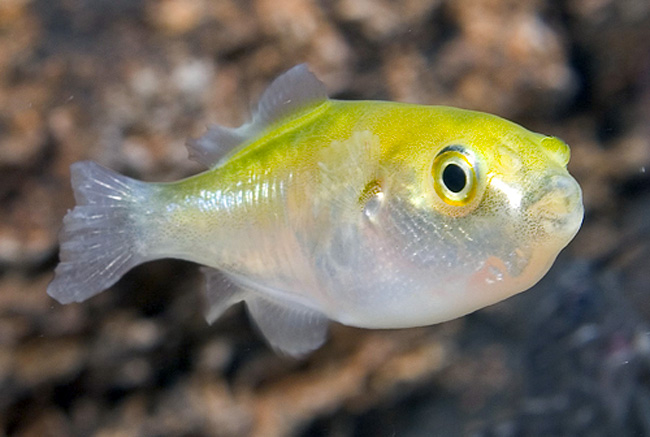
Its name, “Avocado Puffer,” derives from its slightly lumpy, olive-green appearance when resting. A master of camouflage, it spends most of its time buried deep in the sandy substrate, only to pounce speedily on an unsuspecting prey (small fish, shrimp, etc.) swimming by.
It has a large, upturned mouth that helps it swallow whole prey, which makes it appear grumpy at a distance.
10. Red-Eye Redtail Puffer (T. duboisi)
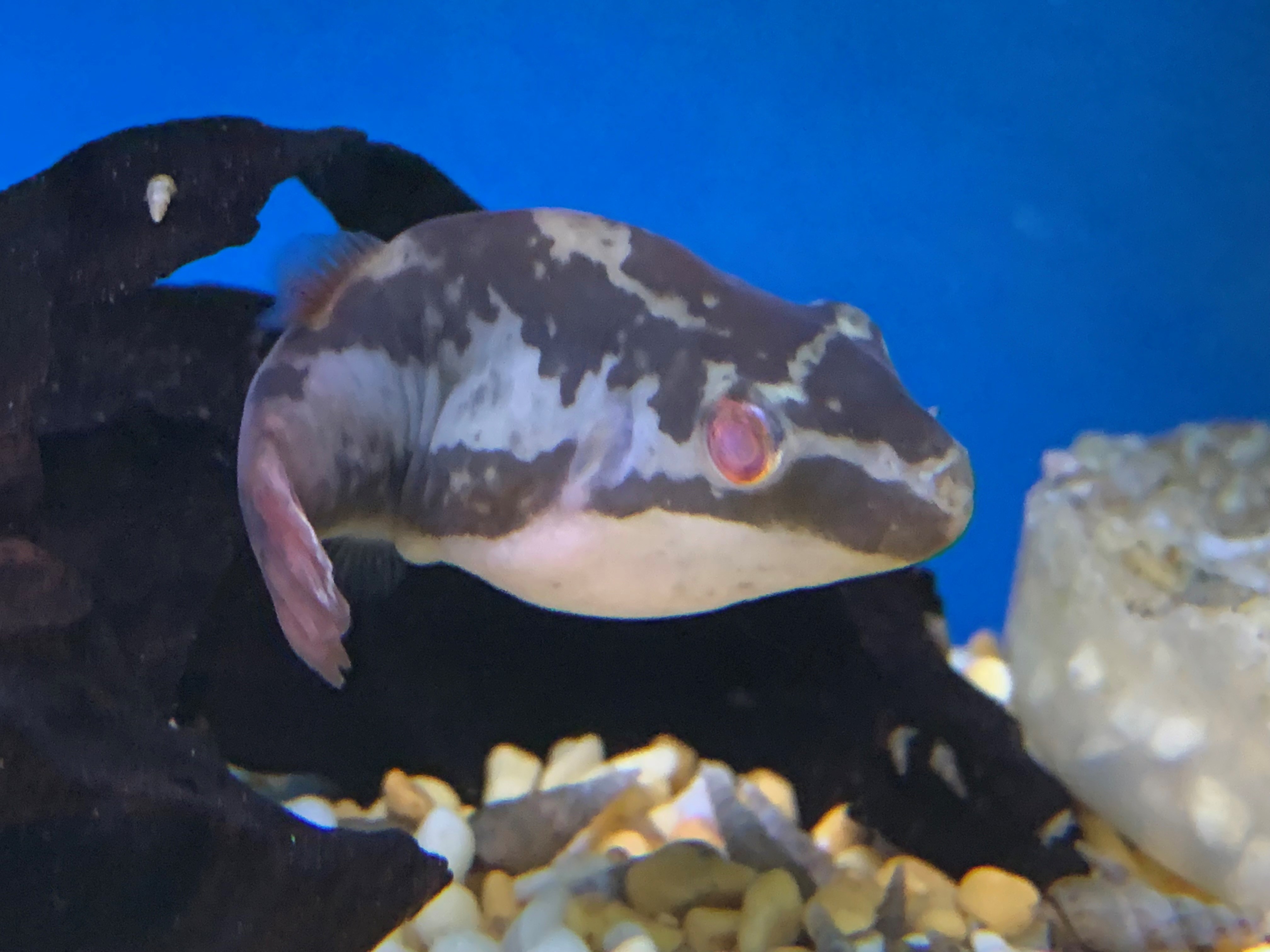
Another example of a freshwater African puffer from the Congo basin, the Red-Eye Redtail Puffer stands out both for its appearance and social behaviour. Despite being similar in size and origins to the Spotted Congo Puffer. They display a dark, mottled brown or grey colour with vivid red eyes and a reddish-orange tail.
Their mottled appearance helps them camouflage both in the wild and in tanks, though they make active and curious aquarium members. They are more aggressive and territorial than their Congo counterpart, with a high risk of nipping the fins and eyes of tank mates. It is usually recommended to keep them in a species-only tank with plenty of driftwood, rocks, and live or artificial plants to create plenty of visual breaks, territories, and hiding spots.
What Do Saltwater and Freshwater Puffer Fish Eat?
Now that you know about the best possible puffer fish options, the next relevant question has to do with their diet. As carnivorous beings, they require hard foods that would prevent their teeth from continuously growing. They thrive on a protein-rich diet composed of shell-based foods like Snails, Mussels, clams, and Crustaceans. Along with frozen bloodworms and brine shrimp.
Best Saltwater and Freshwater Puffer Fish Tank Mates
Small freshwater puffer fish often coexist with fast, non-fin-nipping fish, which helps reduce conflict. Larger species do best in solitary tanks because their territorial nature can lead them to nip fins or attack smaller, more vulnerable tank mates.
Conclusion
Freshwater puffer fish are both intelligent and interactive, making them unforgettable aquarium inhabitants. Whether it’s the charming dwarf freshwater puffer fish or the commanding presence of a Fahaka puffer fish. These fish add a dose of personality to your tanks.
Frequently Asked Questions (FAQs) About Freshwater Puffer Fish
Are There Any Freshwater Puffer Fish?
Yes, there are quite many types of puffer fish that are naturally suited for freshwater environments. This includes dwarf, Amazon, and Fahaka puffers.
Can Freshwater Puffer Fish Live With Other Fish?
While some small species can, most are well-suited to be kept. Either solo or in species-only tanks to maintain internal harmony.
How Big Of A Tank Does A Freshwater Puffer Fish Need?
They can require anywhere from 5 gallons, as in the case of tiny pea puffers. To over 125 gallons for giant freshwater puffer fish.
Are Puffer Fish Freshwater Or Saltwater?
Their species consists of both varieties. Some species are freshwater, like the tiny dwarf freshwater puffer fish, Amazon Puffer, Fahaka Puffer, and larger Mbu Puffer. While saltwater fish include Green Spotted Puffer, Figure 8 puffer, etc. If you’re interested in marine setups, check our guide to saltwater aquarium fish for beginners.