Reef tanks rarely fail overnight. Most crashes happen slowly due to slow-moving reef tank parameter drift that escapes your attention. System Memory inside Reef KG is built to solve this dilemma. Its reef tank baseline tracking feature makes it possible to detect parameter drift early.

Reef tank parameter drift refers to the gradual alterations or changes in your tank’s alkalinity, calcium, nutrients, or salinity from its stable baseline. This may happen due to coral growth, bioload changes, evaporation, or dosing imbalance.
Reef tank parameter drift doesn’t happen randomly but is driven by biological processes.
As your reef matures
Manual dosing cannot keep up with the dynamic nature of reef tanks. Most hobbyists are guilty of a reactive approach to testing. On seeing low alk, they immediately increase dosing or cut feeding when nitrates are too high. This reactive approach forces reefers to correct more than is necessary, which causes more damage than the original imbalance.
Reef tank baseline tracking offers the perfect solution to prevent alkalinity swings and nutrient instability by consistently tracking trends over time.
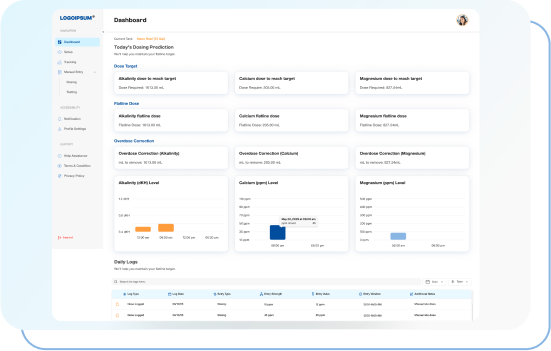
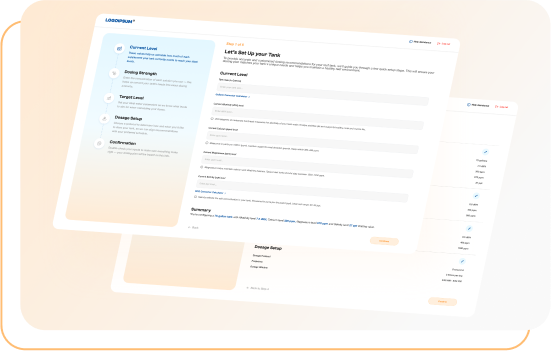
Every reef tank comes with a unique biological “normal.” The ideal parameters may vary from one tank to another. Your system may thrive at 8.1 dKH alkalinity and 430 ppm calcium, while another tank might thrive at slightly different values.
All reef tanks have a specific parameter range at which your coral growth is maximum. This is baseline stability. Reef tank baseline tracking means identifying and protecting your reef’s proven stability zone based on your tank’s past performance record.
System Memory builds this automatically by:
Instead of asking “Is 8.0 dKH acceptable?”, you should determine how far it deviates from your tank’s normal range. That’s the difference between a test log and a reef tank stability app.
Alkalinity spike recovery is one of the most mishandled corrective strategies in reef keeping. A spike to 11 dKH pushes hobbyists into panic mode; they hastily perform water changes, add chemical buffers, hoping to bring down parameters aggressively.
The result is often worse than the spike itself: secondary swings, tissue recession, bleaching.
System Memory enforces a different recovery logic:
reductions greater than approximately 1 dKH per 24 hours — the physiological threshold above which coral stress responses activate.
This is what gradual reef tank recovery looks like — not guesswork, not panic dosing. Implementing structured corrections helps restore stability without creating new instability.
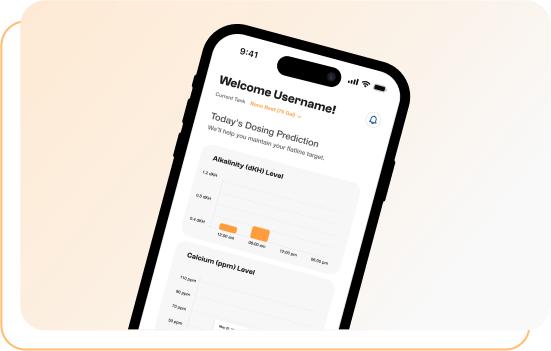
Most dosing calculators estimate your tank’s current volume, assuming that your tank is static. System Memory aims to adapt to changes rather than simply react. Our reef tank monitoring app helps you
Reef tank dosing automation helps you break free from rigid schedules and keeps up with your reef’s actual consumption patterns.
Suppose your alkalinity demand increases 20% over a period of 60 days. System Memory registers that trend. Whenever you face a shortfall, recovery guidance keeps the correction within safe levels.
A collaboration of reef tank baseline tracking and memory-driven recovery yields the following results for your tank;
System Memory transforms reef tank parameter control from emotional reactions into structured stability management.
System Memory core feature layer that seamlessly integrates with your parameter logs, dosing guidance, and tank profile from day one.
As you log readings, System Memory builds a record of your baseline automatically. As your reef grows, it enables you to detect drifts and implement based on actual history.
No need for configuration or setting a manual baseline. It learns your reef as you use it.
Join Reef KG Free — Start Baseline Tracking