
For reef keepers, reef tank dosing remains one of the most powerful tools, but it can turn into a recipe for reef disaster when done in the wrong way. The growth, colour, and vitality of various reef inhabitants, like corals and marine life, depend on whether they are provided with calcium, alkalinity, magnesium, carbon sources, and trace elements in the right amounts.
However, even experienced reef hobbyists run into problems when dosing becomes inconsistent, untracked, or based on guesswork. The good news is that you can overcome most of these issues simply by adopting good dosing practices, such as proper tracking and understanding how your reef actually consumes elements over time.
In this guide, we’ll cover the most common reef dosing mistakes, explain why they happen, and show you how to avoid them.

Why Reef Dosing Mistakes Are So Common for Reef Newbies?
Reef dosing sounds simple in theory. On the face of it, it seems to consist of certain basic steps, such as testing your water for essential nutrients, adding what’s missing, and the cycle continues. In reality, reef tanks are not static but dynamic, interconnected systems.
Consumption patterns tend to vary constantly as corals grow, lighting intensity fluctuates, bioload increases, or when nutrient levels are unstable. The fact is that what worked last month may ruin your reef tank today.
Here’s why reef dosing errors are so common:
- Reef tanks don’t consume elements at a fixed rate
- Daily evaporation affects concentration.
- Testing isn’t always done at the same time.
- Dosing is often based on memory instead of records.
- Multiple additives interact with each other.
Without proper tracking, reef dosing is reduced to a reactive exercise where we simply add on elements to keep nutrients in check. Over time, even small errors or variations from recommended dosing can allow instability to set in.
Mistake #1: Dosing Without Tracking Previous Additions
One of the most common reef dosing mistakes is to keep adding reef dosing supplements without being clear about the previous doses. Many reef keepers aren’t quite sure as to when they last added calcium or alkalinity, but this uncertainty is what leads to accidental double dosing, especially when you are adjusting frequently.
You may not detect immediate damage by overdosing on calcium, but a series of miscalculations can all add up to stress corals. This, in turn, causes dissolved nutrients to precipitate, which destabilises the entire system.
How to Avoid It
- Register every dose, even minor changes
- Review recent dosing before adding more
- Avoid dosing “just to be safe.”
Why Logging Matters?
A proper reef dosing log acts as your reef tank’s memory. Instead of guessing, you can see exactly what was added, when it was added, and how the tank responded. Logging prevents overdosing by turning reef dosing into a deliberate process instead of a reactive one.
Mistake #2: Ignoring Long-Term Parameter Trends
Testing your reef tank parameters is imperative, but single test results don’t tell the full story. Many reef keepers believe that all they need to do is track and respond to isolated numbers without considering long-term trends.
Consider, for example, that a test showed that your tank is low on alkalinity, and you end up putting in a large dose of that, a single high calcium reading makes you stop dosing entirely. In either case, it is the lack of context behind a test result and not testing itself that is problematic.
Why This Causes Problems
Corals respond poorly to rapid changes. Parameters that move back and forth between extremes can negatively impact reef health even if measured accurately. Alkalinity swings, in particular, are one of the most common causes of SPS stress and tissue loss.
How to Avoid It
- Track test results over time
- Look for gradual upward or downward trends.
- Make small adjustments based on patterns, not snapshots.
The Power of Visual Trends
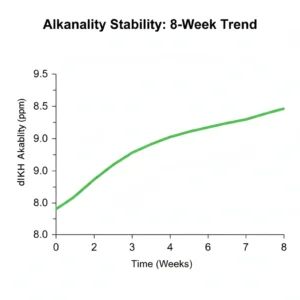
Visual trend charts allow you to view how dosing trends change over a specific time period. A graphic description of rising alkalinity or steady calcium decline is much easier to catch than looking at discrete numbers written on paper or scattered across notes.
Reef Dosing Mistake #3: Inconsistent Reef Tank Dosing Schedules
Many reef keepers chase perfect numbers instead of staying consistent in reef dosing. Inconsistency can take various forms, such as dosing at different times each day, or only when you remember, or worse still, using large, infrequent doses.
All of these cases can cause parameter levels to fluctuate, even if your total weekly dosing looks error-free.
Why Consistency Matters At All?
Corals prefer stable reef conditions over perfection. A stable reef tank with slightly imperfect numbers will outperform a tank with “ideal” parameters that fluctuate daily. When there are lags in dosing schedules, this results in massive spikes and drops in alkalinity levels, unstable pH, and eventually, coral growth suffers.
How to Avoid this Reef Dosing Mistake?
- Set a fixed time for dosing each day.
- Break down large doses into small, hourly additions to mimic the constant environment of the open ocean.
- Stick to a routine, no matter how busy you are
Smart Scheduling with Reef Dosing App Calculator
Using reminders or structured schedules using a reef tank dosing calculator app ensures reef dosing occurs when your tank most needs it, which keeps your parameters predictable. A consistent approach to dosing can dramatically improve coral health without having to change products or equipment.
Reef Dosing Mistake #4: Not Accounting for Actual Reef Tank Consumption
Every reef tank is different in terms of how fast it consumes calcium, alkalinity, and other elements. Yet many reef keepers select doses based on manufacturer recommendations, use online calculators without follow-up, or simply implement what worked earlier.
This approach ignores one critical factor: your reef changes over time, mainly because of shifting consumption patterns. This usually happens when corals are growing or new corals are added, which triggers a higher demand for dosing.
As reef corals grow, consumption increases. When new corals are added, demand shifts. Ignoring consumption trends almost guarantees under- or overdosing.
How to Avoid It:
- Measure parameters at consistent intervals
- Observe how values change between tests.
- Adjust dosing gradually based on real data.
Why Consumption Tracking Matters
Understanding consumption patterns allows you to fine-tune reef dosing instead of reacting to problems when they arise. It turns dosing from trial-and-error into a predictable, controlled process where you determine what goes into your tank, how much of it, and the right time for doing that.
Mistake #5: Changing Multiple Parameters at the Same Time
The moment you discover something off-track or unusual in your reef tank, it’s tempting to fix everything at once. There is a compulsive urge to set it right, whether by adjusting alkalinity, increasing calcium concentration, tweaking nutrients, and making lighting more dim or bright. Unfortunately, these impulsive actions make it nearly impossible to identify what caused issues in the first place.
By jumping to conclusions, you are actually trying to isolate cause and effect instead of seeing them as a whole. This, in turn, impels you to implement corrections with conflicting effects that wreak havoc with your tank’s stability.
How to Avoid It
- Focus on changing one parameter at a time.
- Wait several days before making additional adjustments.s
- Observe how corals respond to changes before repeating them
Logging Makes This Easier
Maintaining clear logs and notes helps link actions with concrete outcomes. When you can see exactly when a change was made and how parameters responded afterwards, reef dosing decisions become much safer and more effective.
Why Visual Trends Catch Reef Dosing Errors Early
Numbers alone don’t always reveal problems. Trends reveal the exact source of the problem. On the surface, a reef tank might test “within range” for weeks even as it slowly drifts towards instability. Visual trend tracking allows you to identify any creeping changes in alkalinity, declining calcium, or testing at irregular intervals. Visual data also makes reef keeping driven by practical and data-driven adjustments instead of panicking over a single test result.
How Proper Logging Prevents Overdosing in Reef Tanks
Overdosing is rarely intentional. It usually happens because reef keepers forget what the last dose was, lose track of adjustments, and underestimate the effects of making cumulative additions based on guesswork.
Logging gives you control over managing parameters, where every dose becomes part of a visible timeline. This makes it much less likely for hobbyists to make any excesses or fall short of what is required to sustain optimal conditions.
By keeping proper dosing logs, you gain insights into your dose history, which allows you to make confident, well-informed decisions as to when and how to adjust. The ReefKG app automates dosing for alkalinity, calcium, and magnesium to keep them in the correct ratio and promote optimal coral growth.
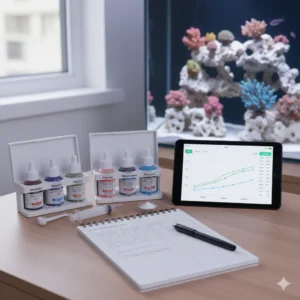
“Testing reef tank parameters and logging reef dosing to prevent overdosing.”
Building a Safer Reef Tank Dosing Routine
Avoiding reef dosing mistakes doesn’t necessarily mean spending loads on expensive equipment or sophisticated systems. It’s more about achieving a sense of structure and consistency in your reef dosing routine while staying aware of your tank’s current conditions.
A simple reef dosing best practice framework comprises these steps:
- Test parameters consistently
- Log every dose and test result.
- Review trends weekly
- Adjust dosing slowly
- Change only one variable at a time
This approach means the difference between a thriving reef tank and one at risk of collapsing at any time, whether you own a nano reef, mixed reefs, or SPS-dominant systems alike.
This explains why a growing number of modern reef keepers have come to rely on reef tank apps to manage this process. An app offers a means to centralise logs, visualise trends, and maintain a consistent dosing schedule without the hassle of manual records.
Final Thoughts
Most reef dosing mistakes aren’t caused by bad products or lack of knowledge, nor are they specific to amateurs. They happen because dosing is done haphazardly without enough visibility into your tank’s internal chemistry.
Whether you manage a nano reef or an SPS-dominant system, the core principles remain the same: logging every dose, visualising parameter trends over time, and maintaining consistent routines.
By doing so, you can transform reef dosing into a result-oriented process that leads to fewer parameter swings and, hence, healthy-looking corals. When you can see exactly what’s happening in your tank over weeks and months, dosing stops feeling stressful and starts feeling empowering.
Ready to take control of your reef dosing? Download Reef KG today and start tracking your parameters with confidence. Available free on iOS and Android.