
The pea puffer has captured the hearts of aquarium enthusiasts worldwide with its tiny size, vibrant personality, and curious nature. Also known as the dwarf puffer or Carinotetraodon travancoricus, this freshwater puffer fish packs a huge personality into a body barely an inch long. If you’re considering adding these fascinating creatures to your home aquarium, this comprehensive pea puffer care guide will walk you through everything you need to know to keep them healthy and thriving.
Understanding the Pea Puffer Fish For Your Reef Tank: What Is a Pea Puffer?
The pea puffer fish originates from the rivers and streams of southwestern India, particularly in Kerala and southern Karnataka. Unlike most puffer species that require brackish or saltwater environments, the pea puffer is a true freshwater species, making it more accessible to hobbyists with standard freshwater setups.
These miniature puffers typically grow to only 1 to 1.5 inches in length, making them one of the smallest puffer species available in the aquarium trade. Despite their diminutive size, they display remarkable intelligence and personality. Each pea puffer fish develops its own unique temperament, with some being bold and outgoing while others remain more reserved.
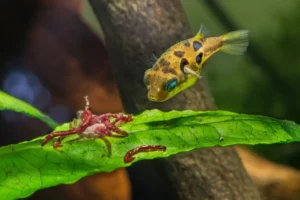
Their appearance is equally charming, featuring a rounded body with large, expressive eyes that can move independently. Their colouration ranges from golden yellow to deep green with dark spots scattered across their bodies. When excited or stressed, they can rapidly change the intensity of their colouration.
Pea Puffer Tank Size: Setting Up the Perfect Environment
Minimum Tank Requirements
One of the most common questions among prospective owners concerns the appropriate pea puffer tank size. While these fish are small, they require adequate space to establish territories and exhibit natural behaviours. The minimum recommended pea puffer tank size is 5 gallons for a single fish. However, if you plan to keep multiple pea puffer fish, you should allocate at least 3-5 gallons per additional puffer.
For a small group of three to four pea puffers, a 15-20-gallon tank provides sufficient space to minimise aggression and allow each fish to claim its own territory. Larger tanks are always better, as they provide more stable water parameters and give these active swimmers room to explore.
Pea Pufferfish Tank Setup and Decoration
Creating an enriching environment is crucial for pea puffer care. These intelligent fish thrive in heavily planted tanks with plenty of hiding spots and visual barriers. Live plants serve multiple purposes: they help maintain water quality, provide cover to reduce stress, and create natural boundaries within their territory.
Excellent plant choices include Java fern, Anubias, Amazon swords, water sprite, and hornwort. Floating plants, such as water lettuce or frogbit, also work well, providing shade and security. The more plants you include, the better your pea puffers will feel.

In addition to plants, incorporate driftwood aquascaping, smooth rocks, and caves to create a complex aquascape. These decorations break up sight lines, which helps reduce territorial disputes in smaller tanks. Ensure all decorations have smooth edges, as pea puffer fish lack scales and can easily injure their delicate skin.
Substrate Selection
Choose a fine-grained substrate like sand or small, smooth gravel. Pea puffers occasionally sift through substrate while foraging, and rough substrates can damage their sensitive bodies. A darker substrate also helps showcase their vibrant colours and makes them feel more secure.
Reef Tank Water Parameters and Quality for Pea Puffer-fish
Maintaining proper water parameters is essential for successful pea puffer care. These fish are sensitive to poor water quality and require stable conditions to thrive.
Ideal Water Conditions
- Temperature: 74-82°F (23-28°C), with 76-78°F being optimal
- pH: 6.5-8.0, with 7.0-7.5 being ideal
- Hardness: 5-15 dGH (soft to moderately hard water)
- Ammonia and Nitrite: 0 ppm (essential)
- Nitrate: Below 20 ppm (lower is better)
Filtration and Maintenance
Invest in a quality filter appropriate for your pea puffer tank size. Since these fish prefer gentle water flow, consider using a sponge filter or an adjustable hang-on-back filter with a flow baffle. Strong currents can stress pea puffer fish and make it difficult for them to swim efficiently.

Perform regular water changes of 25-30% weekly to maintain pristine conditions. Pea puffers are messy eaters, and their carnivorous diet produces significant waste. Use a gravel vacuum during water changes to remove uneaten food and waste from the substrate.
Monitor water parameters regularly using reliable test kits. Consistency is key sudden fluctuations in temperature, pH, or other parameters can stress your pea puffers and compromise their immune systems.
Pea Puffer Diet and Feeding
Natural Carnivorous Diet
The pea puffer fish is an obligate carnivore with specific dietary requirements. In the wild, they feed primarily on small invertebrates, insect larvae, and crustaceans. Replicating this diet in captivity is crucial for proper pea puffer care.
Best Foods for Pea Puffers
The foundation of a healthy pea puffer diet consists of:
- Live and Frozen Foods: Bloodworms, blackworms, brine shrimp, daphnia, and mosquito larvae are excellent staples. Live foods provide enrichment and encourage natural hunting behaviours.
- Snails: This is perhaps the most important component of pea puffer care. Their constantly growing beaks require regular wear from crunching hard-shelled prey. Offer pest snails like ramshorn, bladder snails, and Malaysian trumpet snails several times per week. Many pea puffer keepers maintain a separate snail breeding tank to ensure a steady supply.
- Frozen Foods: High-quality frozen options like mysis shrimp, cyclops, and baby brine shrimp provide variety and convenience.
Feeding Schedule and Tips
Feed adult pea puffers once or twice daily, offering only what they can consume in 2-3 minutes. These fish have small stomachs and benefit from smaller, more frequent meals. Juvenile pea puffer fish may require three smaller feedings per day to support their growth.
Watch for a slightly rounded belly after feeding this indicates they’ve eaten adequately. Overfeeding leads to water quality issues, so remove any uneaten food promptly.

Most pea puffers refuse dried or pelleted foods, though some individuals may accept high-quality frozen preparations after patient training. Never rely solely on processed foods for their nutrition.
Pea Puffer Tank Mates: Who Can Live with These Tiny Predators?
The Challenge of Compatibility
Selecting appropriate pea puffer tank mates requires careful consideration. While adorable, pea puffers can be surprisingly aggressive and territorial, especially toward their own species and fish with similar body shapes or long, flowing fins.

Best Tank Mate Options
When considering pea puffer tank mates, prioritise fast-moving, peaceful species that occupy different water levels:
- Otocinclus Catfish: These small algae eaters are generally safe pea puffer tank mates because they’re fast, bottom-dwelling, and not competition for food.
- Kuhli Loaches: Their secretive, nocturnal nature and different body shape make them suitable pea puffer tank mates in larger tanks.
- Small, Fast Schooling Fish: Species like ember tetras, chilli rasboras, or least killifish may work in spacious tanks with heavy planting, though success varies by individual pea puffer temperament.
- Nerite Snails: While most snails become food, nerite snails have harder shells that many pea puffers cannot crack, making them functional cleanup crew members.
Tank Mates to Avoid
Never house pea puffer fish with:
- Slow-moving fish with long fins (bettas, guppies, angelfish, dwarf gouramis)
- Other aggressive species
- Very small fish that could be perceived as food
- Larger fish that might harass or eat the pea puffers
- Shrimp (they’ll be hunted immediately)
Species-Only Tanks
Many experienced reef tank aquarists recommend keeping pea puffers in species-only tanks alongside other puffer fish. This approach eliminates compatibility concerns and allows you to focus entirely on pea puffer care. In a well-planted tank of appropriate size, a small group of pea puffer fish creates a fascinating display without the stress of managing pea puffer tank mates.
Social Behaviour and Group Dynamics of Pea Puffer Fish
Keeping Multiple Pea Puffers
Pea puffers can be kept individually, in pairs, or in small groups. Their social dynamics are complex and vary significantly between individuals. Some pea puffer fish tolerate conspecifics well, while others display intense territorial aggression.
If keeping multiple, ensure your pea puffer tank size is adequate overcrowding intensifies aggression. Groups work best with more females than males, as males tend to be more territorial. However, sexing juvenile pea puffer fish is challenging, as sexual dimorphism becomes apparent only at maturity.
Males typically develop darker, more intense colouration and a dark line or wrinkle running down their belly. Females remain rounder and less vibrantly colored.

Health and Common Issues of Puffer Fish
Signs of a Healthy Pea Puffer
A healthy pea puffer fish exhibits:
- Bright, vivid colouration
- Clear, alert eyes
- Active swimming and hunting behaviour
- Rounded (but not bloated) belly
- Smooth, unmarked skin
- Strong appetite
Common Health Problems
- Parasites: Internal parasites are common in wild-caught pea puffers. Symptoms include weight loss despite eating, white stringy faeces, and lethargy. Treat with appropriate antiparasitic medications following veterinary guidance.
- Bacterial Infections: Poor water quality can lead to bacterial infections, causing fin rot, cloudy eyes, or skin lesions. Maintain pristine conditions and treat infections promptly with antibacterial medications.
- Overgrown Beaks: Without adequate hard-shelled prey, a pea puffer’s beak may overgrow, preventing proper feeding. This is why regular snail feeding is essential for proper pea puffer care. Severely overgrown beaks may require veterinary trimming.
- Stress: Inadequate pea puffer tank size, poor water quality, or aggressive pea puffer tank mates cause chronic stress, suppressing the immune system and leading to various health issues
Breeding Pea Puffers
While breeding pea puffer fish in captivity is possible, it requires specific conditions and dedication. Pea puffers are egg scatterers with no parental care, making breeding challenging for beginners.
Condition breeding pairs with high-quality live foods, particularly bloodworms and blackworms. Spawning typically occurs among fine-leaved plants or spawning mops. Eggs are tiny, transparent, and easily overlooked.
Remove adults after spawning, as they may consume their own eggs. Eggs hatch in approximately 5 days at 78°F, and fry are extremely small, requiring infusoria or liquid fry food initially, graduating to baby brine shrimp as they grow.
Conclusion: Is the Pea Puffer Right for Your Reef Tank?
The pea puffer is an extraordinary aquarium fish that offers unique rewards for dedicated aquarists. While pea puffer care requires attention to detail—from maintaining appropriate pea puffer tank size to providing a specialised diet and carefully selecting pea puffer tank mates—the experience of keeping these intelligent, personable fish is truly special.
Success with pea puffer fish comes down to preparation and commitment. Ensure you can provide:
- An appropriately sized, well-planted tank
- Regular access to live and frozen foods, especially snails
- Stable water parameters with diligent maintenance
- Patience in managing their territorial nature
- Time to observe and respond to individual needs
For aquarists ready to meet these requirements, the pea puffer offers an engaging, interactive pet with personality far exceeding its tiny size. These miniature predators will quickly become the stars of your aquarium, greeting you at the glass and displaying behaviours that rival fish many times their size. With proper pea puffer care, your pea puffer fish can thrive for 4-5 years, providing countless hours of entertainment and fascination.