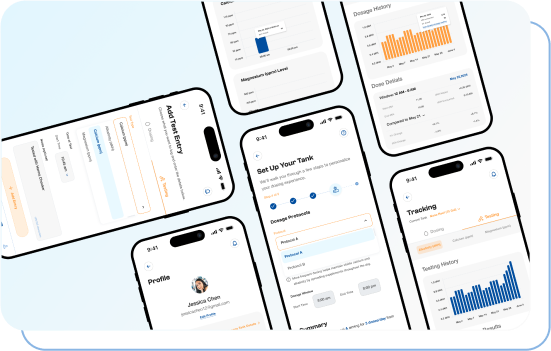
Maintaining a vibrant reef isn’t just about installing the right lights or using the best salts—it’s about maintaining consistency. However, water chemistry tends to go through slow, dangerous shifts from the optimal range. If left unchecked, this drift leads to coral bleaching, algae outbreaks, and eventual system crashes.
Reef KG’s Drift Control offers Aqua precision to proactively manage bioload changes, pH stability, and precipitation risks before they threaten your reef tank stability.

In order to sustain the growth of sensitive species like Acropora or Euphyllia, you must aim for the “Golden Zone.”
In mixed reef systems, experienced hobbyists aim for these stability ranges:
As your fish grow and your corals encrust, they consume more nutrients and produce more waste. We refer to this as Bioload Ratio Drift inside the Reef KG system. If your filtration and dosing don’t evolve with your livestock, nitrate and phosphate spikes will follow. Our Integrated Dosing Throttle adjusts in the background automatically to ensure your filtration capacity matches your biological load.

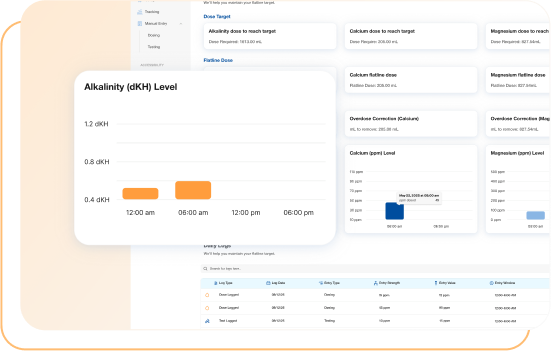
A common hobbyist’s mistake is “eyeballing” their water volume. Rockwork and sand displace significant quantities of water that can affect accuracy. In a 20-gallon nano reef, an error of just 2 gallons can lead to a 10% overdosing mistake, which can be lethal to sensitive polyps. Large alkalinity corrections greater than 1 dKH in 24 hours often stress SPS corals
Pro Tip: Maintaining a stable pH between 8.1 and 8.3 is the secret to accelerating the coral calcification process. Even minor dips at night can stall growth for days.
A white, crusty buildup on your heater or wavemaker happens because of precipitation. Calcium and magnesium bind together into solids when the water chemistry is out of balance.
Why this matters:
Reef KG’s Chemistry Sync Engine monitors Ca and Alk ratios to prevent this. By keeping calcium and alkalinity in a bioavailable liquid state, it aids consistent growth rather than hardware damage.

If you discover your parameters have gone “off-limits,” the worst thing you can do is fix it instantly. Rapid changes kill corals faster than bad parameters do.
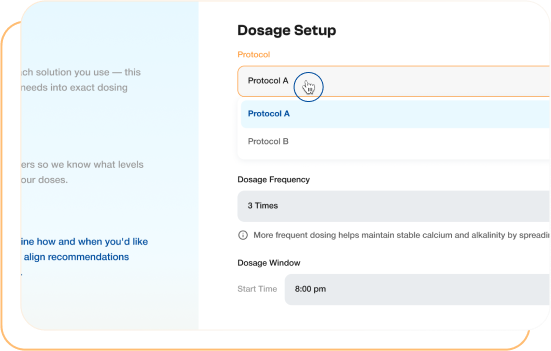
AI Intelligence Throttle: Our reef tank automation app automatically modulates the delivery of buffers, slowing down or accelerating dosing based on real-time consumption trends. This ensures you recover within safe limits without crashing down.
Reef tank parameters drift due to coral growth that increases demand for calcium and alkalinity. Higher consumption leads to increasing bioload and changes in nutrient export. If dosing levels and filtration are not adjusted, parameters slowly shift out of range.
In new tanks, test alkalinity daily and calcium every 2–3 days. Once stable, test alkalinity 2–3 times per week and nutrients weekly.
Make gradual changes to ensure alkalinity doesn’t reduce below 1 dKH per 24 hours. If it does, put dosing on hold and allow natural consumption to bring levels down before performing large water changes.
White crust on heaters or pumps is a result of calcium carbonate precipitation when calcium and alkalinity exceed balanced saturation levels. This reduces mineral availability to corals and can damage equipment.