
Maintaining a thriving reef is a delicate balancing act of physics and chemistry. When your water parameters are optimized, the entire ecosystem stabilizes, and your corals grow to their best potential. However, when dosing goes wrong, your tank’s parameters swing from one extreme to the other, which stresses marine life. Reef KG’s reef tank dosing provides an automated mechanism to keep your alkalinity, calcium, and magnesium in perfect balance. Let us take care of your tank’s water chemistry to turn your hobby into a success.

Corals are highly sensitive marine invertebrates that rely on stable water chemistry to survive and grow. Even small changes in temperature, salinity, or nutrient levels can stress corals, trigger algal growth, or even lead to coral loss.
Reef systems are different from freshwater aquariums in that they demand reef tank parameter control to keep up with the coral’s high rate of consumption of calcium, alkalinity, and magnesium.
An unstable tank is associated with problems like:
A reef tank monitoring system ensures your water chemistry stays within the ideal range. This provides a foundation for healthy coral growth, vibrant colors, and long-term tank success.
When adjusting alkalinity:
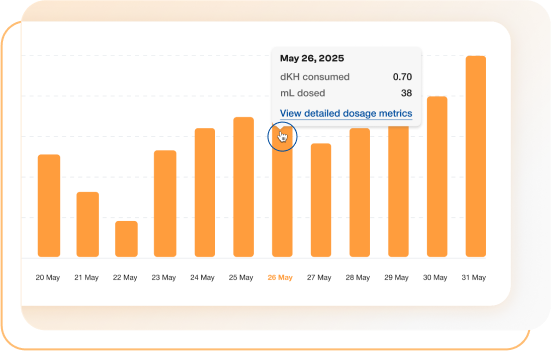
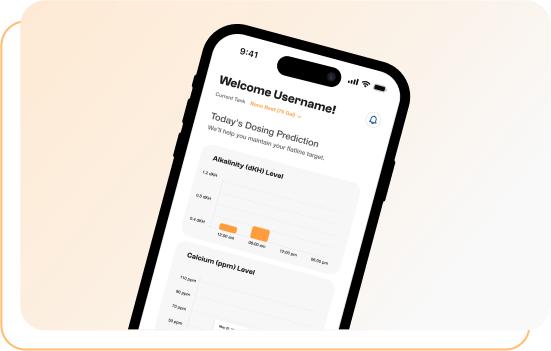
SPS-dominant tanks may consume 0.3–0.8 dKH per day, while Soft coral systems may consume much less. Automated reef tank dosing systems make it easier to divide doses into 24 small increments rather than adding one large dose at once.
Our high-accuracy Tank Volume Calculator helps you identify your system’s true water capacity so that alkalinity remains a safe threshold.
Before automating your system, you must determine your “Daily Draw”:
Example:
Day 1: 8.5 dKH
Day 2: 8.1 dKH
Day 3: 7.8 dKH
Total drop = 0.7 dKH over 2 days
Daily consumption ≈ is 0.35 dKH per day
Calcium is the foundation of every thriving coral reef. However, calcium and magnesium levels must be in sync. If you overdose on calcium without sufficient magnesium, it can lead to abiotic precipitation, where calcium carbonate crusts onto your heaters and pumps.
The Problem: High-energy SPS (Small Polyp Stony) corals consume calcium rapidly, while soft corals may barely touch it.
Ignoring magnesium is a huge mistake. When magnesium levels are low,
Magnesium corrections should be gradual:
If alkalinity and calcium won’t stabilize despite proper dosing, check magnesium first.
Reef KG turns complex dosing strategies into streamlined habits. By helping you track and manage calcium and magnesium dosing with precision, it helps mineral levels stay consistent and in sync with your alkalinity to prevent chemical “crashes.”

Alkalinity acts as the buffer while pH is the driver. Maintaining a stable reef tank pH, ideally between 8.1 and 8.3, significantly increases the rate at which corals absorb minerals from the water.
Ideal Range: 8.1–8.3
Low pH (below 8.0) can slow coral growth.
Common causes of low pH:
Actionable Step: Monitor your magnesium levels, as magnesium is vital to keep a stable relationship between pH and alkalinity. This will cause your live rocks to stay purple and your corals vibrant.
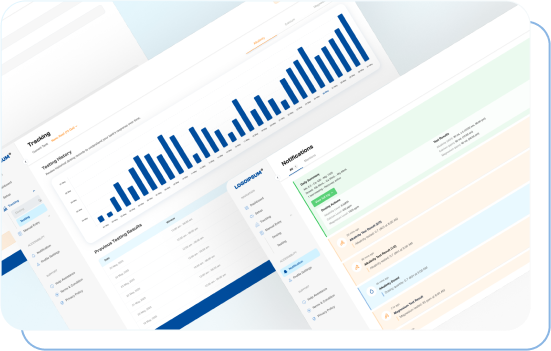
New hobbyists find it challenging to interpret data. AI Reef Tank Coaching takes on the role of your digital mentor. Our Chemical Dosing Calculator doesn’t provide you with a snapshot: it analyzes the CA to Alk ratio to determine whether your tank’s chemistry is perfectly balanced for maximum coral growth.
If a rise in calcium is not matched by a drop in alkalinity, the system flags the imbalance immediately. This helps prevent uncontrolled ionic shifts that cause coral bleaching.
Reef KG makes reef tank dosing easier than ever by intelligently monitoring the proportion of these minerals to maintain tank stability.
