
Healthy, vibrant corals are the heart of any stable saltwater aquarium, but if they fade into a dull, muddy tan, it’s an alarm you shouldn’t miss.
Are you dealing with coral turning brown in your reef tank? You must realize that this isn’t simply an aesthetic problem but an SOS signal from your ecosystem.
Browning is usually a sign that your coral’s symbiotic relationship with its internal algae, zooxanthellae, has been thrown out of balance.
In this guide, we’ll dive into the science of “browning out” to help you understand what may have caused corals to turn brown and provide a step-by-step recovery plan to bring those fluorescent pigments back to life.
Why is My Coral Brown? Understanding Color Loss
Within every SPS coral lie populations of microscopic algae called zooxanthellae that provide corals with nutrition via photosynthesis. The corals in return offer them a living habitat, making thw two bound in a symbiotic relationship.
Browning out is your coral’s physiological response to an internal population explosion. Whenever there is a shift in environmental conditions, such as a surge in nutrients like nitrates and phosphates or a drop in light intensity, the zooxanthellae reproduce at a higher than normal rate.
These algae are golden-brown in color, so when they increase in numbers, they overshadow the coral’s vibrant fluorescent pigments. This is what gives corals a somewhat muddy appearance.
Coral browning doesn’t indicate that the corals themselves have lost color, but that their internal balance has been disturbed. If you desire to bring back the blues, purple, and pink hues of healthy corals, the very first thing you need to do is to restore the tank to its normal state of affairs. A low-nutrient, high-energy environment is a must if corals are to display their colorful pigments rather than an overabundance of brown symbiotic algae.
Typical Causes For SPS Corals Turning Brown
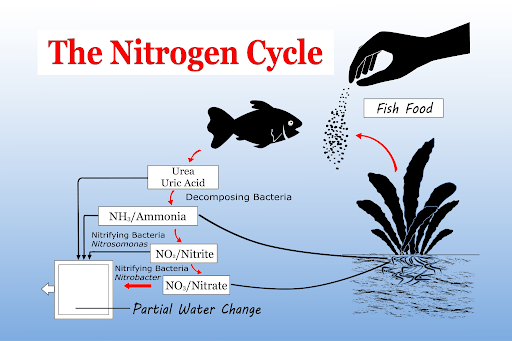
The most common culprit is an excess of Nitrates, NO, and phosphates, PO. Reefs are nutrient-poor in their natural environment, but levels can rise in your tank—often due to overfeeding or inadequate filtration.
This fertilizes the zooxanthellae, causing them to multiply rapidly to soak up the excess wastes. The growing algae overwhelms the coral’s natural pigments, turning them brown.
2. Inadequate Light Intensity or Spectrum
Corals produce vibrant pigments (chromoproteins) as a form of “sunscreen” to protect themselves from high-energy light. If your PAR (Photosynthetically Active Radiation) levels are too low, or if your LED spectrum has shifted too far into the green/yellow range, the coral no longer needs this protection.
It will shed its colorful pigments and increase its brown zooxanthellae count to maximize food production in the dim light.
3. Stability Issues and Stress
Corals prefer “boring” water where Alkalinity, Salinity, or Temperature stay within normal limits. Rapid swings can cause physiological stress that can put corals in survival mode. This can trigger a brownout phase, where corals get dull as a result of coping with a fluctuating environment.
How to Prevent Corals from Turning Brown
Reverting corals from turning brown is far easier than reversing the process. A key concept in this regard is the “Nutrient-to-Light” ratio.
If you want to keep corals vibrant, you need to manage this ratio carefully. Ideally, nitrates must be below 5–10 ppm and Phosphates below 0.05 ppm to prevent over-fertilizing the brown zooxanthellae.
An equally important factor is the light intensity; corals typically require lighting in the range 250–400 PAR to stimulate chromoproteins for protection.
Beyond chemistry, stability is the ultimate preventative. Alkaline swings are the most destructive for corals, so it’s best to use a reliable dosing pump or kalkwasser stirrer.
Don’t let it exceed the 0.5 dKH range, as this helps reduce metabolic stress that leads to pigment loss.
Water flow is another critical factor. Ensuring strong, turbulent movement prevents detritus from settling on the coral tissue while sweeping away waste products. This allows the corals to focus energy on growth and color rather than fighting for survival.
Final Words
Ultimately, coral turning brown in a reef tank is a biological puzzle, not a permanent failure. By balancing high-intensity light with low inorganic nutrients and rock-solid stability, you can tip the scales back in favor of vibrant pigments over muddy algae.
Remember that the most beautiful reefs in the world aren’t built in a day; they are the result of consistent, incremental adjustments and a deep understanding of your tank’s unique chemistry. Stay patient and keep a close eye on the subtle shifts in your coral’s tissue, and you will be rewarded with the reef of your dreams.
Master Your Reef’s “Golden Zone” with ReefKG
Ready to stop guessing and start growing? Keeping your parameters in the perfect range is the only way to reverse browning and lock in professional-grade color. Whether you are balancing Alkalinity or tracking the precise Nitrate-to-Phosphate ratio, ReefKG helps you visualize your tank’s health in real-time so you can catch nutrient spikes before they dull your corals.
Download ReefKG today and bring the “pop” back to your reef!
FAQ’s
Does brown coral mean it’s dying?
Not necessarily. Corals develop a brown color as a protective mechanism against an overabundance of symbiotic algae (zooxanthellae). Coral turning brown is an indicator of environmental stress or high nutrients, rather than a coral-killing event like bleaching (turning white) or tissue necrosis.
How long does it take for coral to change color and regain its pop?
As long as your lighting and nutrient levels are right, you can see a noticeable color shift anywhere between 4 and 8 weeks. You’ll have to be patient so that the corals have the time to physiologically adjust their algae population and build up the protective pigments to recreate the popping blues and pinks.
Why is my coral brown even though my parameters are “perfect”?
If you find yourself asking, “Why is my coral brown?” despite low nitrates and phosphates, you should look into light intensity or spectrum. If corals don’t get enough PAR, they don’t need to get into a defensive mode, which can increase the density of algae. As the algae try to capture more energy, you see the corals turning brown.